


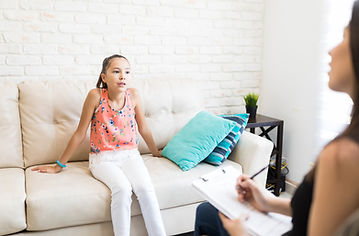
When a child is struggling, it can be challenging to know what’s really going on. Whether they’re showing aggression, getting into power struggles, having frequent meltdowns, or not meeting typical milestones, children have many different ways of telling us that something is bothering them. That’s why child therapy can also look many different ways. Unlike adults, who typically sit on a couch and talk out their problems, children often don’t have the words to explain what they’re feeling. Instead, they tend to need a more “hands-on” approach that involves action, such as playing or making art. In my work, I focus on understanding the emotional experiences that may be shaping your child’s behavior, even when those experiences are not immediately visible or easy for them to express verbally.
What will my child's sessions be like?
Many of the behaviors that bring children to therapy are not random. They are often a child’s way of coping with feelings that feel too big, confusing, or overwhelming to manage directly. In many cases, children aren’t fully aware of these feelings, even as they act them out.
In therapy, I begin by offering your child a space where they can express themselves freely. Over time, patterns begin to emerge – how your child experiences the world, what they may be struggling with internally, and how they tend to respond when emotions feel intense. I meet your child in whatever way they communicate best, whether that’s through play, conversation, or a combination of both. As I get to know them, I gently help them begin to notice their feelings and understand how those feelings are connected to their problems.
As children begin to feel more understood, both by themselves and within the relationship, we often start to see shifts. Reactions may soften, new ways of coping can emerge, and things that once felt overwhelming may become more manageable. This process takes time. The patterns your child relies on are often there for a reason and may feel protective to them. Moving away from those patterns can feel unfamiliar or even a little scary at first. I work at a pace that feels manageable for your child, helping them gradually build the capacity to face and work through what’s been difficult.
What will our parent sessions be like?


Parent sessions are an important part of the therapeutic process, whether we're working together to address your child's difficulties directly or supporting them in their individual therapy. Whatever the focus of our work, we'll approach it as a collaborative effort. I bring my clinical perspective and an understanding of how children communicate and experience the world. You bring something just as essential: your lived experience of being your child's parent and the day-to-day reality of your family life.
Our work together often begins with developing a fuller understanding of your child's difficulties and exploring ways to help things go differently at home. We'll look at what's happening beneath the surface of challenging behaviors, what may be contributing to them, and how your responses interact with your child's needs in difficult moments. Together, we'll consider what changes might be helpful and pay attention to how things unfold over time. Sometimes, this work with parents is enough to make a meaningful difference without beginning individual therapy for your child.
If individual therapy is recommended, our work together doesn't end there. Parent sessions remain an important way to understand how your child is doing outside the therapy room, support the work unfolding in their sessions, and explore relationship difficulties that may be contributing to their struggles. As treatment progresses, we may shift from regular meetings to periodic check-ins. We can also meet more often during times when your child or family needs additional support.
Do you want a more harmonious connection with your child? Use the button below to reach out and see if I can help!